
The Science & Benefits
A plain-English look at how focused acoustic pressure pulses and deep-tissue massage may support circulation, tissue response, comfort, mobility and recovery — grounded in the published research on acoustic pressure-wave therapy.
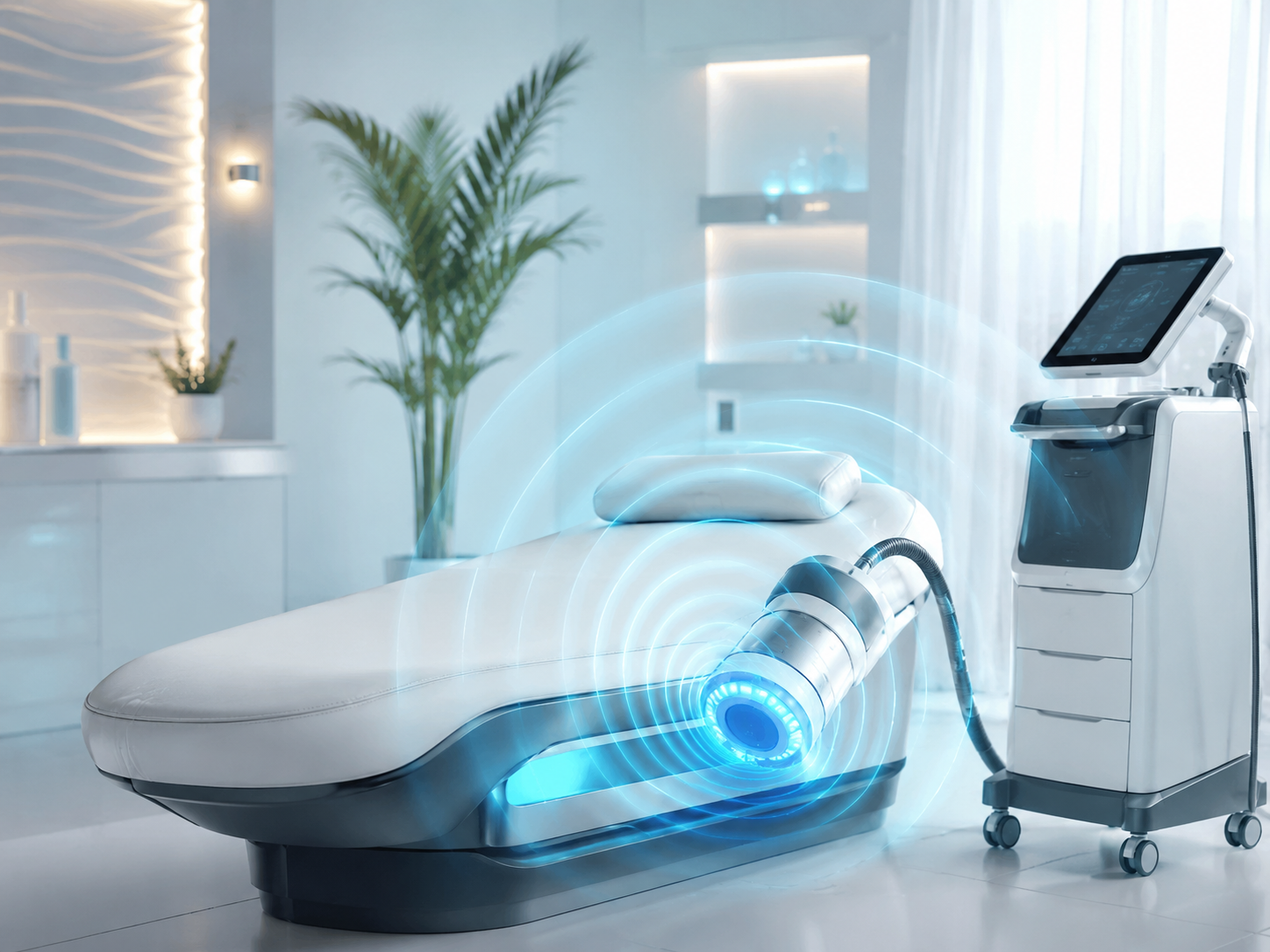
Mechanical energy can trigger a biological response
CellSonic VIPP delivers focused acoustic pressure pulses. Scientific literature calls this category "shockwave" or "extracorporeal pressure-wave" therapy because each pulse is fast and energetic. The therapeutic principle is mechanotransduction — cells converting a physical force into biochemical activity related to repair and adaptation.
Cells respond to mechanical force
When a pressure wave passes through tissue, cells sense the mechanical stimulus and convert it into intracellular signals. Reviews describe activation of pathways such as ERK1/2 and PI3K-Akt, which influence cell proliferation, migration and gene expression tied to repair.
Circulation & new micro-vessels
Studies report that acoustic pressure waves can upregulate endothelial nitric-oxide synthase (eNOS) and vascular endothelial growth factor (VEGF) — key signals associated with local blood flow and the formation of new micro-vessels (angiogenesis) around treated tissue.
Growth factors & repair processes
Published reviews discuss effects on growth factors, regulation of inflammation, cellular proliferation, collagen organisation and tissue-repair processes following pressure-wave exposure.
Comfort and movement
Clinical reviews report evidence that acoustic pressure-wave therapies can benefit pain and function in several soft-tissue and musculoskeletal concerns, though results vary by condition, device and protocol.
Hands-on bodywork adds more
Deep-tissue massage contributes myofascial release, nervous-system calming, circulation support and mobility-focused work — complementing the focused stimulus of VIPP in a combined session.
From kidney stones to recovery: a 40-year lineage
Focused acoustic-wave technology was first used medically to break up kidney stones — the original non-invasive surgery. Over four decades it has been refined for soft-tissue and recovery applications, with CellSonic engineering an especially fast pressure pulse.
Origins in lithotripsy
Acoustic shock waves were first used to shatter kidney stones without surgery — proving that focused sound energy could act precisely inside the body.
Soft-tissue applications
Researchers found the same focused energy could stimulate circulation, signalling and repair processes in soft tissue and the musculoskeletal system.
Faster, sharper pulses
CellSonic's electrohydraulic design produces an unusually fast rise time and high peak pressure — a cleaner mechanical signal, focused on the target.
Brought to your home
That technology now arrives at your door, paired with personalised guidance and optional deep-tissue massage.
A practical wellness experience focused on how you feel and move
The goal is to give your body a focused, well-tolerated stimulus, support healthier movement, and combine modern technology with skilled hands-on care.
- Supports circulation and oxygen delivery in targeted tissue
- Encourages a natural tissue-response and recovery environment
- May help with stiffness, tension and mobility limitations
- Complements massage, stretching, movement and healthy recovery habits
- Every session is personalised to your goals and comfort level

Where the science comes from
A starting point for the published literature on acoustic pressure-wave and shockwave therapy. These describe mechanisms and outcomes studied in research settings; individual results vary.
- Extracorporeal shock wave therapy mechanisms in musculoskeletal regenerative medicine. Journal of Clinical Orthopaedics & Trauma, 2020.
- Biological response of extracorporeal shock wave therapy to tendinopathy in vivo (review). Frontiers, 2022.
- Shock wave as biological therapeutic tool: from mechanical stimulation to recovery and healing, through mechanotransduction. ScienceDirect, 2016.
- Low-energy shock wave therapy induces angiogenesis via VEGF receptor-2 phosphorylation. PLoS One, 2014.
- Extracorporeal shock wave therapy for wound management: a systematic review of clinical evidence, modalities and mechanisms. 2025.