
CellSonic VIPP Therapy
VIPP stands for Very Intense Pressure Pulses — focused acoustic sound-wave energy delivered through a professional shock head to support circulation, tissue response, comfort, mobility and recovery. Non-invasive, drug-free, and brought to your door.
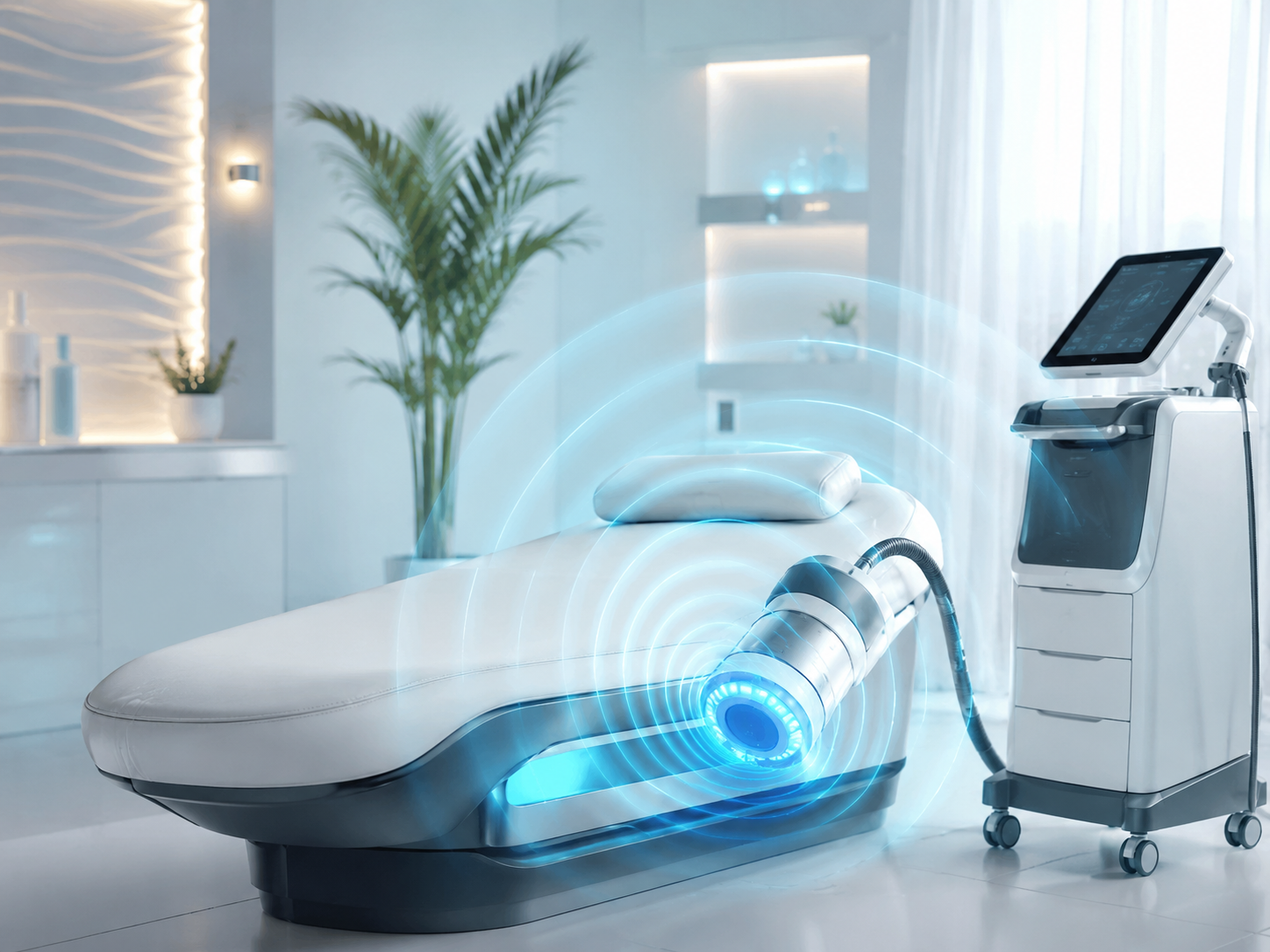
A genuine acoustic pressure wave — generated by a spark in water
Inside the CellSonic shock head, a high voltage is discharged across an electrode submerged in water. That spark creates a rapidly expanding-and-collapsing gas bubble, which produces a true acoustic shock wave. An elliptical reflector focuses that wave and aims it precisely at the target area.
A conductive gel couples the shock head to your skin. Because your body is largely water, the pressure wave travels through tissue efficiently and predictably. Healthy cells comfortably withstand the pulse; the energy simply delivers a focused mechanical stimulus exactly where it's directed.
This electrohydraulic, focused approach is what separates CellSonic from common radial (ballistic) "shockwave" guns, which spread unfocused mechanical vibration across the surface. VIPP is targeted, deeper, and far faster.
- High-voltage spark discharged in water creates the wave
- Elliptical reflector focuses energy onto the target
- Gel couples the head so the pulse passes cleanly into tissue
- Healthy cells tolerate the pulse; the stimulus stays focused
Rise time: why a faster pulse does more
The "rise time" is how quickly each pulse climbs to its peak pressure. The sharper that climb, the cleaner the signal the tissue receives — and the deeper it travels.
An exceptionally fast rise time
CellSonic's wave reaches peak pressure roughly a thousand times faster than a typical radial shockwave. A faster wavefront transfers its mechanical signal more efficiently into the body.
Higher peak pressure, focused
Focused pulses carry a peak pressure many times greater than unfocused radial devices, concentrated on the target rather than scattered across the surface.
A controlled, steady cadence
Pulses are delivered at a measured rate, and the machine counts them — stopping automatically once the planned number for the area has been delivered.
Penetration where it's needed
Because the wavefront is sharper and focused, energy travels deeper into tissue — which is why many people notice a response from the very first visit.
How a pressure pulse asks the body to respond
Research papers file this technology under "shockwave" or "extracorporeal pressure-wave" therapy. For clients, it's simplest to think of it as focused sound-wave energy used to create a helpful mechanical signal in tissue.
Mechanical stimulation
The pulse creates a brief mechanical signal in tissue. Cells sense and respond to mechanical force through a process called mechanotransduction.
Circulation support
Studies explore how acoustic pressure waves may influence local blood flow, nitric-oxide signalling and the formation of new micro-vessels around treated tissue.
Repair signalling
The literature discusses growth-factor pathways and cellular activity associated with tissue regeneration and repair following pressure-wave exposure.
Comfort & function
Clinical reviews of acoustic-wave therapies report evidence of benefit for pain and function in several soft-tissue and musculoskeletal concerns.

Focused, professional, and set to your comfort
Alicia reviews your goals, selects the area, applies gel, and adjusts intensity to a level that suits you — checking in throughout.
Most people describe pressure-pulse therapy as a distinct, targeted, tapping-or-thudding sensation right on the working area. It's unusual at first but well tolerated, and the intensity is always dialled to you. A typical focus area takes only minutes, and the machine stops itself once the planned pulse count is reached.
- No surgery, no injection, and no clinic waiting room
- Private, in-home sessions across Calgary and area
- Can be booked on its own or combined with deep-tissue massage
- Aftercare and follow-up guidance based on your response
CellSonic VIPP questions, answered
Is CellSonic VIPP the same as the shockwave gun at a clinic?
No. Many clinics use radial (ballistic) devices that spread unfocused vibration across the surface. CellSonic is electrohydraulic and focused — a spark in water creates a true acoustic wave with a far faster rise time and higher peak pressure, aimed precisely at the target. It's a different class of technology.
Does it hurt?
You'll feel a firm, focused tapping sensation on the working area. It's distinct but well tolerated, and Alicia sets the intensity to your comfort and checks in throughout. If an area is sensitive, the energy is reduced.
How long is a session and how many do I need?
A focus area takes only a few minutes of active pulsing within a 60-minute appointment. How many sessions you choose depends on your goals and how your body responds — Alicia will talk through a simple plan with you.
Is there any downtime?
None for most people. It's non-invasive and drug-free, so you return to your day right away. Some clients notice mild, short-lived tenderness in the treated area, similar to after a workout.
Who should check with a doctor first?
As a wellness service, certain situations call for medical clearance first — for example pregnancy, blood-thinning medication, pacemakers or implanted devices, active infection or cancer in the area, or treating directly over major nerves or growth plates. If you're unsure, ask Alicia and check with your healthcare provider.
Experience CellSonic VIPP at home
Book a focused pressure-pulse session, or combine it with deep-tissue massage for a complete reset.